|
![]() |
|
|
|
|
|
|
|
|
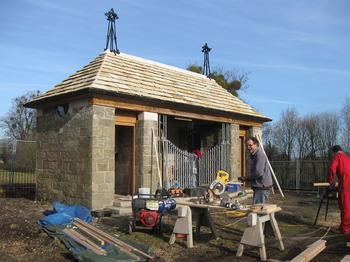
Workshop Inspection
By on March 10, 2010
Avenue Park entered into Higher Level Stewardship
By on March 10, 2010
Avenue Park has been entered into the HLS scheme run by Natural England. This will help the Countryside team deliver significant environmental benifits to the area. The objectives of the scheme are wildlife conservation, enhancement of landscape, natural resorce protection, protection of historic environment and promotion of public access and understanding. New free printed guide
By on March 5, 2010
The guide has now been reprinted, and includes new information and photographs. To receive a free copy, use the online form.
Design sketch by Christopher Hatton Turnor
By on February 1, 2010
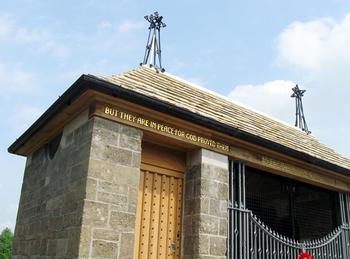
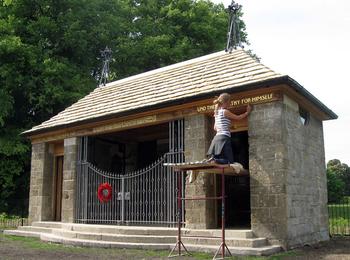
New information suggests that the original design sketch of the Shrines is by the architect and social reformer Christopher Hatton Turnor (1873-1940). The handwriting and style of the Shrine sketch (below) seems to match other drawings by Turnor (second below). The design of the Shrine roof in the sketch closely resembles that of a lych gate (below) at Stackpole, Pembrokeshire, which was designed by Turnor. After leaving Oxford University, Turnor initially worked as an architect, firstly for Edwin Lutyens - with whom he designed the Ferry Inn at Rosneath for Princess Louise - and later for the Arts & Crafts architect Robert Weir Schultz (1860-1951). Turnor's most famous independent work is the Watts Gallery in Surrey (which came second in the BBC Restoration programme in 2006). Turnor was an early enthusiast for cement as a building material. He was also a skilled craftsman, designing furniture and interior fittings. Turnor had apparently stopped practicing as an architect by the outbreak of the First World War. Christopher Turnor - known as Kit - was a close friend of Charles Phillimore, Violet Willis Fleming's brother, and carried out architectural work for the Phillimore family at Shedfield in Hampshire. A director of Coutts Bank, Charles Phillimore was in charge of the Willis Fleming family's finances during the early twentieth century, when the Shrines were built. In 1903, Turnor inherited his family's estates in Lincolnshire, and became increasingly interested in estate management and agricultural reform. He published several books on these subjects, for which he is best known. Turnor remained friends with Lutyens, who with Gertrude Jekyll was a frequent visitor to Turnor's mansion at Stoke Rochford in Lincolnshire. Turnor's first diary, which he kept from October 1917, however shows that he had nothing to with the physical construction of the Shrines from that date. During the War, he served on numerous Government committees. Stoneham Lintel Carvings
By on January 29, 2010
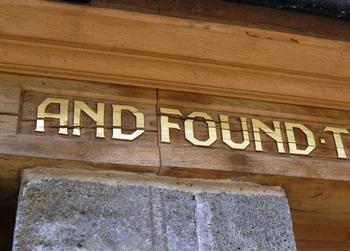
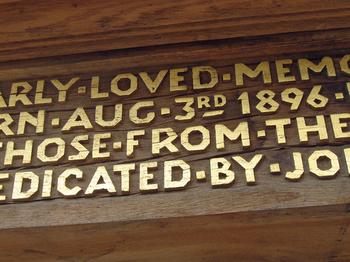
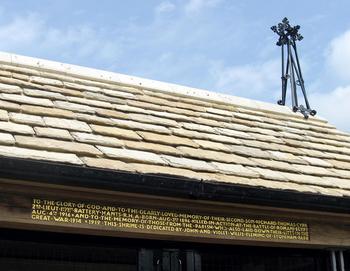
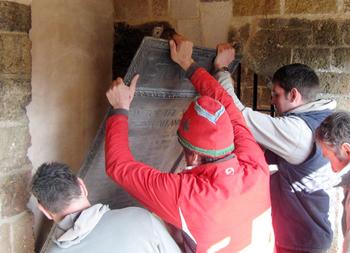
Last Tuesday (26th January) the surviving sections of carved lintel from the Stoneham shrine were inspected by the wood carver, carpenter and architects, prior to the production of replicas. Subtle variations from that of the Havenstreet Shrine were discovered in the wording of the central text. Rubbings and photographs were taken to accurately record its size and spacing.
Dick's Diary
By on December 30, 2009
The wartime diaries of 2nd Lieut. Richard Willis Fleming (1896-1916) are being transcribed, and, beginning on 24 February 2010, the entries will be published daily as a weblog - Dick's Diary - 94 years to the day since they were first written. The diaries start on 24 February 1916 and follow the 162 days until Richard's death in Egypt on 4 August.
Nightingale School Lay Wreath
By on November 12, 2009
Havenstreet War Shrine Listed
By on November 10, 2009
Act of Remembrance 2009
By on November 10, 2009
Contractor Appointed
By on November 4, 2009
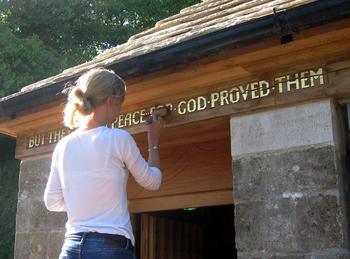
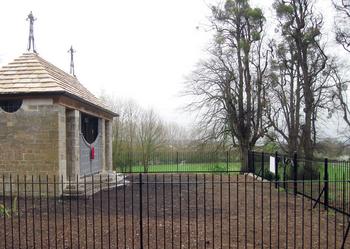
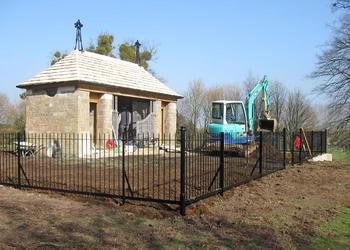
Magenta Building Repair Ltd have been appointed as the main contractor, and work on the Shrine is now underway. We are expecting the craftsmen to move onsite at Avenue Park by the beginning of February 2010.
|